
Using Microlearning to Train Seasonal Hotel Staff Quickly and Effectively
By Janos Laszlo
- microlearning
- seasonal staff
- hotel training
- AI quizzes
- hospitality LMS
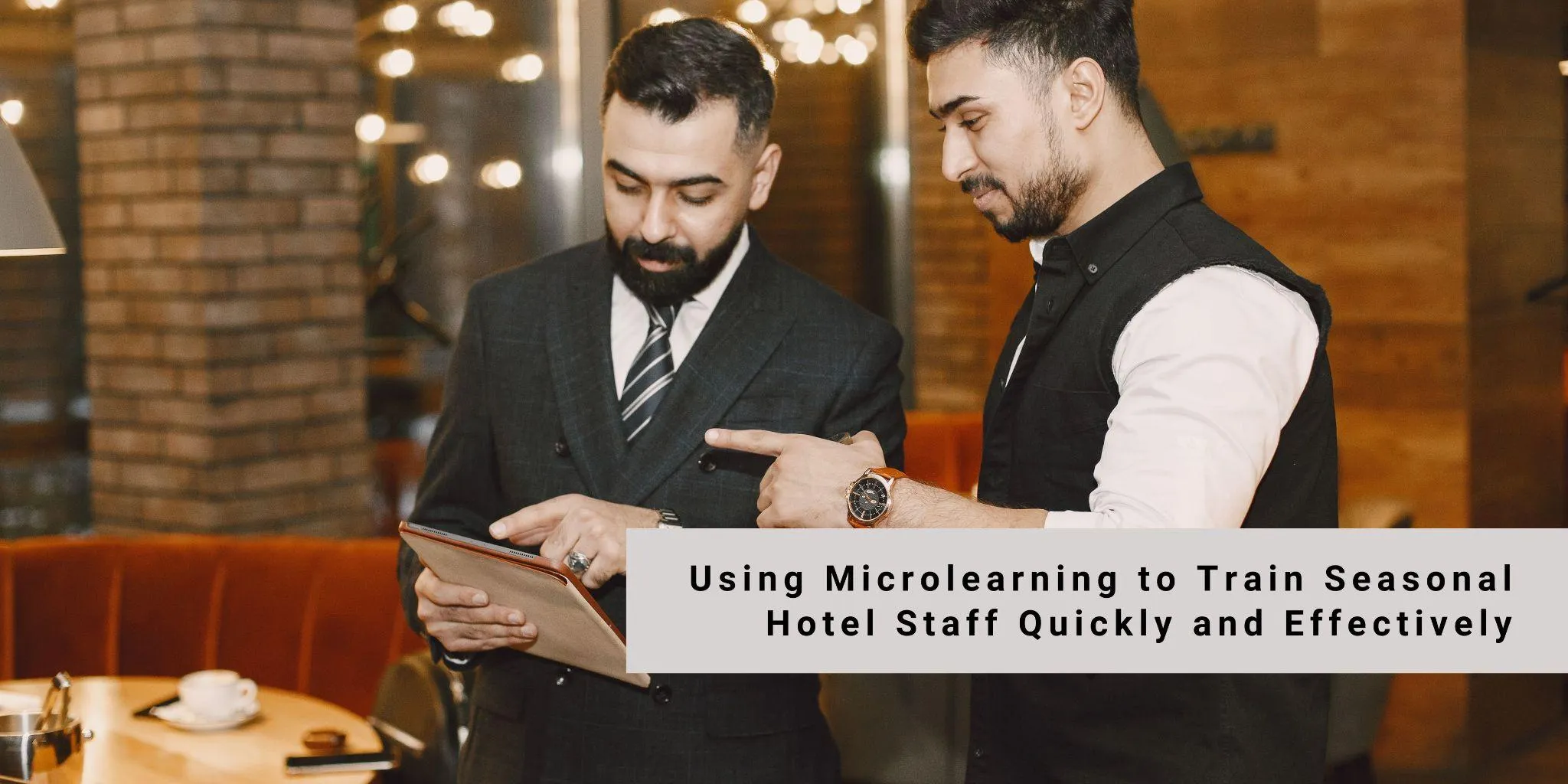
A 45-minute induction session for a seasonal hotel hire covers everything and retains nothing. By the time the new starter is on shift, they remember the fire exit and little else. The allergen protocol they need for service three hours later is somewhere in the middle of a slide deck they will never open again.
Microlearning is the format that actually works in this environment. Not because it is a trend but because it matches how human memory functions and how hospitality teams operate.
What is microlearning for hotel staff?
Microlearning is a training format that delivers content in focused modules of one to two minutes, each covering a single topic. Instead of one long session, a seasonal hire completes food safety today, allergen awareness tomorrow, and cocktail knowledge the day after. Each module takes less time than a coffee break, covers one thing specifically, and is followed by a short quiz that confirms the knowledge stuck. The result is faster onboarding, stronger retention, and training that actually happens rather than getting deferred because nobody has time.
Why short modules retain better than long ones
The science behind this is well established. The brain retains information more effectively when it is presented in small, spaced doses rather than large single sessions. Research consistently shows that spaced microlearning produces 20 to 30% better knowledge retention than long-form training.
For seasonal hotel staff, this matters practically. A new hire who completes a two-minute module on allergen handling, answers three questions, scores 80%, and receives a certificate has demonstrably learned something. A new hire who sat through a 45-minute induction and signed a form has evidence of attendance, not evidence of learning.
The difference shows up on the floor. When a guest asks about a dietary requirement, the server who completed a focused allergen module answers with confidence. The one who sat through the induction reaches for their phone to find the manager.
How PocketTrainer delivers microlearning for seasonal teams
AI-generated quizzes from your own content
The barrier to building microlearning content has historically been time. Writing quiz questions, structuring modules, building assessments — none of this fits into the week a hotel is onboarding thirty seasonal hires.
PocketTrainer removes this barrier with AI-powered quiz creation. A manager uploads a menu PDF, pastes a cocktail list, links a document from the platform folder, or copies text from anywhere, and the AI generates a quiz automatically. Two to three questions per topic, pitched at the right level, ready to assign within minutes.
This means every seasonal hire gets a quiz on the specific menu they will be serving, not a generic food knowledge test. A bar hire gets questions on the current cocktail list. A server gets questions on the seasonal menu. A kitchen starter gets questions on the allergen matrix. The content is relevant, the creation takes minutes, and the assessment is immediate.
Quizzes on menu categories
PocketTrainer generates quizzes directly from menu categories: food, cocktail, and wine menus each become their own quiz bank. When the menu changes mid-season, the quiz updates to match. Seasonal staff are always being assessed on what is actually on the menu, not what was on it when the content was last manually updated.
One to two minute modules
Every module on PocketTrainer is designed to be completed in one to two minutes. This is not a compromise on depth. It is a deliberate format choice that reflects how learning actually happens in a hospitality environment. A seasonal hire completes a module during a pre-shift briefing, between tasks, or on the commute in. Training fits into the gaps in the day rather than requiring the day to stop.
The importance of repeated learning
One completion is not enough. A seasonal hire who completes a wine knowledge module in week one and never revisits it will have forgotten most of it by week three. Repeated exposure is what converts short-term recall into reliable operational knowledge.
PocketTrainer builds repetition into the system through regular quiz assignments, refresher modules, and the leaderboard feature. Managers can assign a weekly quiz on a different menu section, a refresher on allergen handling before a busy weekend, or a new module as the seasonal menu evolves. The team keeps engaging with the material throughout the season, not just during induction.
The leaderboard: making repeated learning competitive
PocketTrainer’s leaderboard tracks quiz scores and course completions, with weekly and monthly winners celebrated across the team. For seasonal hotel staff, this creates something that generic training cannot: a reason to keep going after the mandatory modules are done.
A seasonal hire who is competing for the top of the weekly leaderboard is not just completing required training. They are voluntarily revisiting menu knowledge, retaking quizzes to improve their score, and learning more than the minimum. The competitive element turns a compliance exercise into something the team actually engages with.
Weekly winners are visible to the whole team. Monthly winners can be recognised at a briefing, in a team message, or with a small reward. The cost is minimal. The engagement return is significant.
PocketTrainer’s Food Allergen Awareness For Restaurants UK, Food Safety For Restaurants Level 2 UK, Wine Knowledge 101, Beer Mastery 101, and WOW Service courses all feed into the leaderboard, so every module a seasonal hire completes contributes to their standing.
If you want to see how PocketTrainer’s microlearning and leaderboard work for a seasonal hotel team, book a 15-minute demo.
What a microlearning onboarding week looks like in practice
Day 0 (before first shift): fire safety module, food safety module, allergen awareness module. All completable on phone. Certificates issued automatically.
Day 1: role-specific module assigned. Bar hire gets cocktail menu quiz. Server gets food menu quiz. Kitchen hire gets COSHH module.
Day 2: follow-up quiz on day one content. Score tracked. Gaps flagged to manager.
Days 3 to 5: two to three short modules per day covering service standards, complaint handling, and product knowledge specific to the role.
End of week 1: every hire has completed eight to ten modules, holds current compliance certificates, and has a quiz score that tells the manager exactly where their knowledge gaps are.
This is achievable within the existing workday, without pulling managers off the floor, and without a single classroom session.
Final thoughts
Microlearning does not require a content team, a training budget, or a quiet room. It requires a platform that makes short, quiz-based learning easy to build and easy to complete. PocketTrainer was built for exactly this: one to two minute modules, AI-generated quizzes from your own menus and documents, a leaderboard that keeps seasonal staff engaged beyond induction, and completion tracking that tells you who is ready before they go near a guest. Book a 15-minute demo to see it in action.