
Unlock untapped revenue potential by elevating your staff’s beverage knowledge
By Janos Laszlo
- beverage training
- upselling
- wine knowledge
- revenue
- restaurant staff training
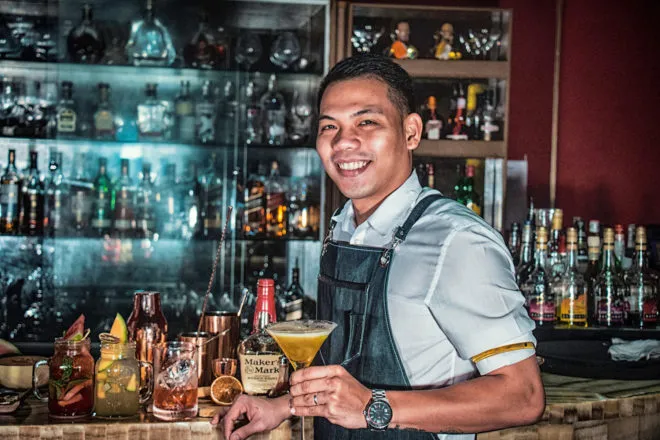
Most restaurants train their sommelier on the wine list and their bar team on the cocktail menu. Everyone else learns by listening in. The result is a floor team where one or two people can answer a beverage question confidently, and the rest deflect to “let me get someone who knows.”
That deflection costs money every time it happens.
How does staff beverage knowledge increase restaurant revenue?
Staff beverage knowledge increases restaurant revenue by enabling any team member to recommend, upsell, and answer questions confidently, not just the sommelier or bartender. A server who can suggest a specific wine pairing, explain the difference between two spirits, or describe a cocktail with genuine knowledge converts more add-ons per cover than one who cannot. The revenue impact compounds across every shift, every table, and every team member who has been trained.
The revenue case
Beverage margin is consistently higher than food margin in most restaurants. A bottle of wine that costs £12 to purchase sells for £45. A cocktail that costs £3 in ingredients sells for £14. The margin on beverages is where restaurants make disproportionate profit relative to effort.
The constraint is not product quality. It is staff confidence. A guest who asks “what would you recommend with the lamb?” and receives a genuine, specific answer is significantly more likely to order the recommended bottle than a guest who receives “I’ll get our sommelier” and waits three minutes.
Training every member of your front-of-house team to handle basic beverage questions is not a premium service upgrade. It is a revenue recovery exercise.
What beverage knowledge training actually covers
Effective beverage training for restaurant teams covers four areas:
Wine basics and pairing principles. Not a sommelier-level course. The ability to describe the difference between a Sauvignon Blanc and a Chardonnay, explain what makes a wine full-bodied, and suggest a pairing for the three or four most popular dishes on the current menu. This can be achieved in a few hours of structured learning.
Spirit knowledge. The difference between a blended and single malt whisky, the main rum categories, how to describe a mezcal versus a tequila to a curious guest. Bar staff need this in depth. Floor staff need enough to recommend confidently and hand off credibly.
Cocktail menu knowledge. Every server should be able to describe every cocktail on the current menu: the primary flavour profile, the spirit base, whether it is sweet or dry, and what type of guest tends to enjoy it. This is not complex knowledge. It is product knowledge, the same way a server knows the menu.
Non-alcoholic and low-alcohol options. An increasingly important category. Guests who do not drink alcohol are often poorly served because the team’s beverage knowledge stops at wine. Training staff on mocktail offerings, premium non-alcoholic spirits, and interesting soft drink options captures a segment of the table that is frequently ignored.
Who needs to be trained
The answer is not just the bar team. It is every person who interacts with a guest during a meal.
Servers and waitstaff are the primary revenue touchpoint for beverage recommendations. They are at the table when the guest is making decisions. If they cannot answer questions or make suggestions, the opportunity passes.
Reception and reservations staff set expectations before the guest arrives. A reservations team member who can mention “we have a new cocktail menu” or “our sommelier has put together a new wine flight” primes the guest for a higher-spend experience.
Kitchen and BOH staff do not need beverage knowledge for sales. They need it for allergen and ingredient awareness, particularly around wines that contain sulphites, beers that may contain gluten, or spirits used as cooking ingredients.
Managers need beverage knowledge to coach their teams, run briefings, and handle guest escalations when a question goes beyond a server’s knowledge.
How to deliver beverage training practically
The challenge in hospitality is time. A two-hour classroom session on wine education does not fit into a pre-service briefing. Training needs to be short, mobile-accessible, and immediately applicable.
Short modules completed on a phone before a shift are more effective than long sessions completed in a training room. A ten-minute module on pairing principles, completed in the week before a menu change, produces better retention and application than a forty-minute session completed once.
Repeat exposure also matters. A server who completes a wine basics module and then hears the same information reinforced in a three-minute pre-service briefing will retain and apply it more confidently than one who completed the module six months ago and has not revisited it.
PocketTrainer’s Wine Knowledge 101, Beer Mastery 101, General Spirit Knowledge, and Cigar Mastery 101 courses are built for exactly this: short, mobile-first modules that give your whole team the product knowledge they need to recommend with confidence, not just the specialists.
If you want to see how PocketTrainer delivers beverage training across your team, book a 15-minute demo.
The table turnover benefit
There is a secondary revenue benefit to broader beverage knowledge that is less obvious: speed. When any server can take a beverage order without finding the sommelier or flagging the bar manager, the table moves faster. Drinks arrive sooner. The meal progresses at the right pace. Guests who feel well-served spend more and turn the table on time.
In a restaurant doing three covers per table on a busy night, the cumulative effect of faster, more confident beverage service across the floor is material.
Final thoughts
Beverage knowledge is not a specialist skill that belongs only to your sommelier and bar team. It is product knowledge, the same as menu knowledge, and every member of your front-of-house team can and should have it. The operators who train their whole team on beverages consistently see higher per-cover spend, faster table turns, and better guest reviews. The training investment is modest. The revenue return is not. Book a 15-minute demo to see how PocketTrainer delivers this for your operation.