
Multi-Brand Hospitality Training: How Sunset Hospitality Group Trains their Brands on One Platform
By Janos Laszlo
- Sunset Hospitality Group
- multi-brand training
- hospitality LMS
- SUSHISAMBA
- Black Tap
- staff training
Quick Summary
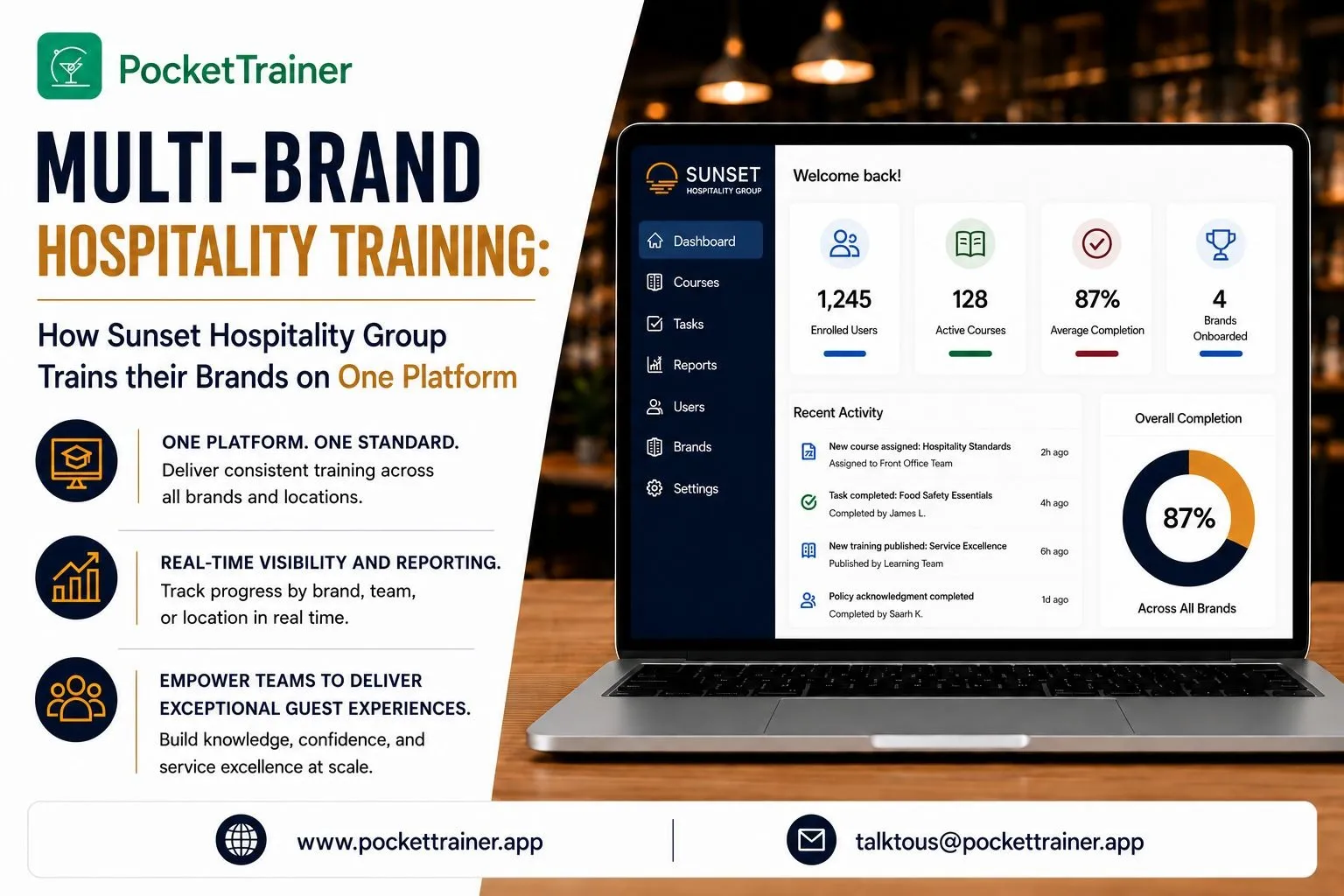
- Training one restaurant is manageable. Multi-brand hospitality training across distinct concepts, countries and cultures is one of the hardest versions of the problem hospitality faces.
- Sunset Hospitality Group runs SUSHISAMBA, Black Tap, AURA Skypool and Signor Sassi, each with its own identity, across 112 properties in 26 countries.
- Teams across all four brands described the same shift: from paper, scores written by hand, and chasing people down, to a single mobile platform.
- Gen Z and millennial staff consistently named accessibility, flexibility and career visibility as what made digital training actually work for them.
- The pattern holds regardless of scale: multi-country hospitality group training succeeds when it reaches staff on their phones, on their schedule, tied to real career growth.
Training one restaurant is a manageable job. Training a global group of distinct brands, each with its own concept, cuisine and culture, spread across dozens of countries, is one of the most complex challenges in hospitality. Sunset Hospitality Group operates at exactly that scale, and the teams inside four of its brands, SUSHISAMBA, Black Tap, AURA Skypool and Signor Sassi, described what digital training did for them.
This is the story of multi-brand, multi-outlet, multi-country training told from the floor, by the people who actually used the platform. Their words, across four very different venues, point to the same conclusions about what modern restaurant staff training needs to be.
What Makes Training Hard for Multi-Brand Hospitality Groups?
Sunset Hospitality Group, founded in 2011, is a multinational lifestyle hospitality group operating over 112 properties across 26 countries, spanning hotels and resorts, restaurants, beach clubs, nightclubs and more. Its portfolio includes distinct concepts like SUSHISAMBA, the Japanese-Brazilian-Peruvian fusion brand, Black Tap, the craft burger and shake concept, AURA Skypool, the rooftop pool and dining destination in Dubai, and Signor Sassi, the classic Italian restaurant brand.
That diversity is what makes the training challenge so hard. Each brand has its own menu, service style, standards and identity, yet the group needs consistency, quality and compliance across all of them. Multi-brand, multi-outlet and multi-country at once is about as complex as hospitality operations get, and it cannot be run on paper and goodwill.
Sunset Hospitality Group at a Glance
| Founded | 2011 |
| Properties | 112 |
| Countries | 26 |
| Workplace certification | Great Place to Work® since 2021 |
| Recent recognition | #13, Best Workplaces for Hospitality, GCC 2025 |
It matters, too, that Sunset is a people-focused group, certified as a Great Place to Work since 2021 and ranked #13 on the Best Workplaces for Hospitality in the GCC for 2025. A group that invests in its people is a group that takes training seriously, and that is the context in which its teams adopted digital training.
How Do Large Hospitality Groups Manage Training Across Different Brands?
Large hospitality groups manage training across different brands by using a central digital platform that delivers brand-specific content while maintaining group-wide standards and visibility. Each brand has its own menus, service style and standards, so the platform must let each customise its content, while head office keeps oversight of completion and compliance across every venue and country.
Mobile access is essential because staff work on the floor across many time zones and shifts. Delivering training digitally, rather than on paper, is what makes consistency, quality and compliance achievable across a complex multi-brand, multi-country group.
From Paper To A Phone: What Changed
The starting point for most of these teams was old-fashioned and painful.
“Our restaurant training evolved quite a lot. From old-school, using papers, writing down scores, finding everyone, where they are, and when they are going to take the quizzes. Well, Pocket Trainer is one of my personal favourites.” Sherra May Shelotte, Brand Training Manager, Black Tap
The shift from chasing paper and people to a single digital system is the change that underpins everything else.
For the staff themselves, accessibility was the headline.
“Accessibility is the most important thing about Pocket Trainer. What has changed since we introduced Pocket Trainer is that it’s so much easier to organise training or upload training material to the staff.” Ana Boncheva, Head Waitress, SUSHISAMBA
Her verdict on the old way was blunt.
“Boring. We need something new, something interactive. It’s easy to have an app. You have everything in one place rather than spreadsheets and stuff like that.” Ana Boncheva, Head Waitress, SUSHISAMBA
Not everyone was convinced at first, which makes the turnaround more telling.
“I would be completely honest, in the beginning, I wouldn’t believe that it would help that much. Honestly, but it changed everything.” Michail Lazarou, Assistant Manager, SUSHISAMBA
His way of describing the shift in habit stuck.
“Instead of scrolling on Instagram, you can train yourself in 30 minutes. It’s very very helpful, and I didn’t believe in the beginning.” Michail Lazarou, Assistant Manager, SUSHISAMBA
The move away from paper struck a chord across brands.
“It’s easy, it’s smarter, it’s faster. And also what is very important is that we are not wasting paper.” Claudio Brembilla, Supervisor, Signor Sassi
He added a point operators often underestimate.
“This is very, very important. People think it’s not, but it’s very, very important.” Claudio Brembilla, Supervisor, Signor Sassi
Reaching A Young Workforce On Its Own Terms
A recurring theme across all four brands was that the modern hospitality workforce learns differently, and paper does not reach them.
“Gen Z right now, for sure they don’t want papers, they don’t want to read anything. Right now, they want to see everything on their laptop, iPad, on their phones.” Sherra May Shelotte, Brand Training Manager, Black Tap
That instinct is backed by wider workforce data. According to the report, 76% of Gen Z employees say they would be more engaged at work if their employer offered more short-form, on-demand learning, exactly the format a mobile-first platform delivers by default.
That generational shift is not only about format; it is also about what staff want from an employer.
“My generation, I can say, I’m something between a millennial and a Gen Z, I think what we want to know from a company is where is my career path, where do you see me, what can you offer me.” Ana Boncheva, Head Waitress, SUSHISAMBA
That instinct tracks with the data too, Gen Z employees are notably more likely than older colleagues to say learning helps them see a path forward at work, according to workforce research aggregated by High5 Test’s 2026 Gen Z workforce report, which found 53% of Gen Z cite this compared to 37% of older workers.
“Before, the people they were looking for just about the money. Now it’s not only about the money, it’s about the lifestyle that you’re doing, it’s about the training that you get.” Driton Maloku, Head Waiter, SUSHISAMBA
For this workforce, training is part of the offer, not an afterthought.
Want to reach your team the way these brands did?
Book a 15-minute demoFlexibility Across Shifts, And Learning That Builds Careers
In a group where staff work across shifts, days off and time zones, getting everyone together for training is close to impossible.
“Flexibility is really important because, especially for us now, we are working many hours, and we have different shifts. Not everyone has the same time at work or the same days off. We cannot really get all the staff together.” Nicolas Diaz, VIP Waiter, AURA Skypool Dubai
Digital training removed the need to. It also helped people grow, which is the retention point Sunset’s people-focused approach is built on.
“My favourite module would be the Courses, because moving from the bar to the floor, it helped me a lot, for example, the handling customer complaints course.” Nicolas Diaz, VIP Waiter, AURA Skypool Dubai
That is training doing its real job: not ticking a box, but moving a person from one role to another with the skills to succeed.
“Pocket Trainer, for me, is very sustainable, at least for my part as a training manager. Because we all started, everyone, I think, doing this job manually. Pocket Trainer actually innovates the world of training industry.” Sherra May Shelotte, Brand Training Manager, Black Tap
“They have to start using the app. They must understand that our work is changing all the time. Everything is on the cell phone.” Michail Lazarou, Assistant Manager, SUSHISAMBA
Does Multi-Brand Training Only Apply to Large Hospitality Groups?
Sunset operates at a scale most groups will never reach: 112 properties, 26 countries, four distinct brands in this story alone. But the pattern the teams describe is not scale-dependent. A group with three brands in two cities faces the same underlying problem: different concepts, different standards, one workforce that expects training on its phone, not on paper.
The mechanics that worked here (mobile-first delivery, brand-specific content on a shared platform, and training tied visibly to career progression) apply just as directly to a smaller multi-concept operator as they do to a 112-property group. The complexity scales with the business; the fix does not need to.
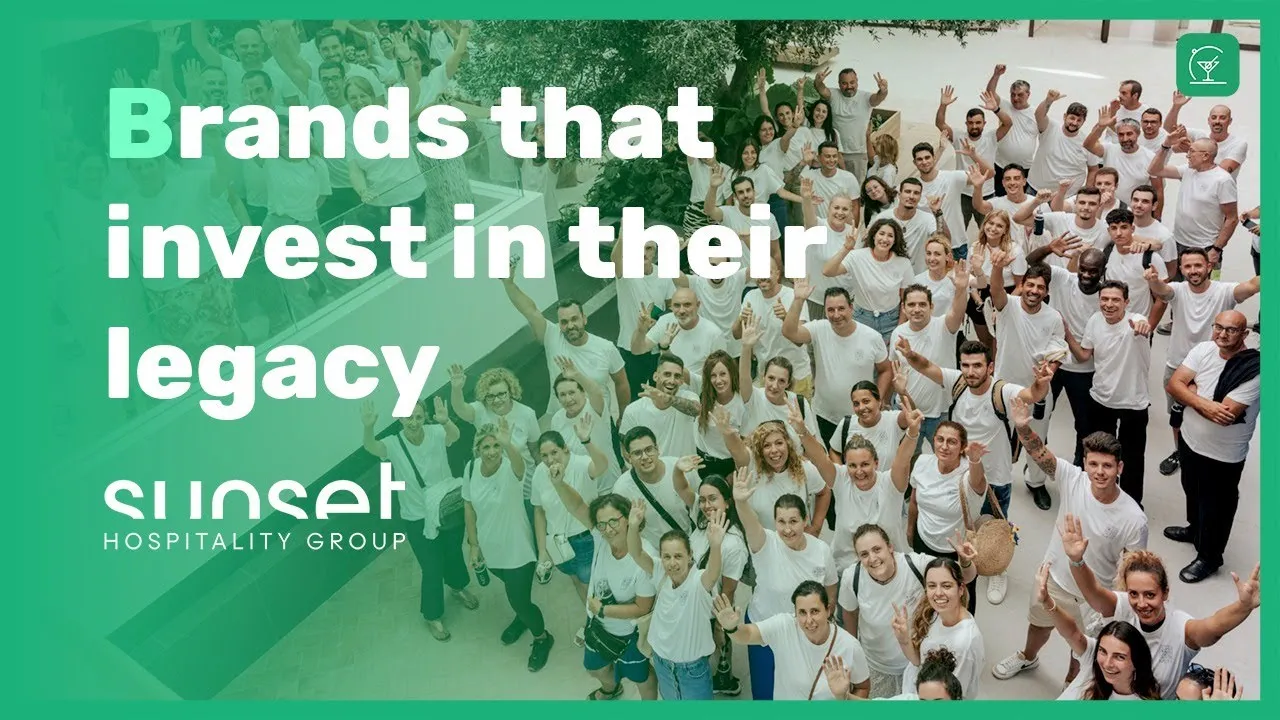
Playing loads the video from YouTube, which may set cookies.
The Takeaway
Sunset Hospitality Group’s scale, distinct brands like SUSHISAMBA, Black Tap and AURA Skypool, spread across many countries, is the hardest version of the hospitality training problem: multi-brand, multi-outlet and multi-country at once. The teams inside those brands described the same shift in their own words, from paper and chasing people to a single mobile platform that reaches a young workforce where they already are, flexes around shifts, and gives staff a path to grow.
For a people-focused group, that is not a nice-to-have; it is how multi-brand hospitality training keeps pace with the business.
Want to build and test your team’s menu knowledge without the manual work?
Book a 15-minute demoWe will walk through it with your menu in mind. You can also read more about the digital food bible that holds your menu and the hospitality LMS behind it.
FAQs
1 What is multi-brand hospitality training?
Multi-brand hospitality training is the practice of delivering consistent, trackable training across several distinct restaurant, hotel or hospitality concepts under one group, each with its own menu, service style and standards, while maintaining group-wide compliance and quality oversight from a central platform.
2 How does training across brands stay consistent while still reflecting each brand’s identity?
A central platform holds group-wide standards while allowing each brand to customise its own content, menu knowledge, service style and specific courses, so a server at one brand and a waiter at another both get consistent core training with content genuinely relevant to their venue.
3 Why does Gen Z respond differently to digital training than paper-based training?
Gen Z staff have grown up mobile-first, and research shows a majority would engage more with short-form, on-demand learning delivered on their phone rather than printed materials or scheduled group sessions. Multiple team members in this piece independently described the same shift, from seeing training as boring paperwork to something they actually use.
4 Does multi-country hospitality group training need to work across time zones?
Yes. Staff working different shifts, days off and time zones cannot realistically be gathered for group training sessions, which is why mobile access that lets someone complete training whenever and wherever they are becomes essential rather than a convenience once a group operates in more than one country.
5 Is this approach only relevant to very large hospitality groups?
No. The underlying problem, multiple brands or concepts needing consistent standards without losing individual identity, exists at any scale beyond a single site. A three-brand, two-city operator faces the same core challenge as a 112-property group, just at a smaller size.